Water intrusion is the No. 1 cause of construction litigation, accounting for more than 70% of all construction defect cases according to data tracked by the American Institute of Architects (AIA). This post walks attorneys through why water is such a persistent culprit, which building envelope components fail most often, and what strong expert witness analysis actually looks like in these cases.
More than 70% of all construction lawsuits involve water intrusion. That is not a guess. The American Institute of Architects has tracked that number for more than a decade. If you handle construction defect cases on either the plaintiff or defense side, that single statistic shapes your practice more than almost anything else.
So why does water cause so much litigation? And when a construction defect water intrusion case lands on your desk, what separates a strong expert analysis from a weak one?
Here is what you need to know.
Why Water Intrusion Dominates Construction Defect Cases
Water does not care about contracts, warranties, or manufacturer installation instructions. It finds the path of least resistance, and it is relentlessly patient.
A building can have a defect for years before enough water accumulates to cause visible damage. By then, the original work is buried under layers of finishes, overburden, or additional construction. Tracing a leak back to its source is not always obvious, even to experienced eyes. That delayed discovery is one reason construction defect water intrusion cases are so common in courtrooms. By the time damage shows up, memories are fuzzy, subcontractors are long gone, and original crews can be nearly impossible to find.
These cases also tend to involve significant dollar amounts. A single water intrusion event in a commercial building can cause structural damage, microbial growth, destroyed finishes, displaced tenants, and lost revenue. These are not $10,000 problems. They are six- and seven-figure disputes.
Where Water Gets In: The Building Envelope
The building envelope is everything that separates the inside of a building from the outside: roofing systems, exterior walls, windows and doors, waterproofing membranes below grade and at elevated terraces, and the transitions and flashings where these components meet.
In construction defect water intrusion litigation, the envelope is almost always where the failure originates. And within the envelope, certain components fail far more often than others.
Flashings and transitions are at the top of the list. Where a roof meets a wall, where a window meets a wall assembly, where one material ends and another begins: these are the places water exploits first. These details require precise installation, and they are also the places where shortcuts are most likely to happen.
Fenestration systems – windows, storefronts, and curtain walls – are a close second. A window that looks perfectly fine from the inside can be leaking slowly into the wall assembly for months before anyone notices. By then, the damage to framing, insulation, and interior finishes can far exceed the cost of the windows themselves.
Roof systems and waterproofing membranes round out the most common failure points. Single-ply membranes, built-up roofing, modified bitumen, and plaza deck waterproofing systems are only as good as their installation and their protection from other trades working on the same job site.
The Field Reality Behind Most Water Intrusion Claims
Here is something most experts will not tell you: the root cause of most construction defect water intrusion cases is not a bad product. It is the gap between the manufacturer’s published installation instructions and what actually happened in the field.
We see this in nearly every case we work. A contractor installs a product the same way they have always installed it, without ever consulting the instructions. In one case, we met a roofing contractor on site who insisted his step flashing installation was correct. When we asked whether he had read the installation instructions, he said he had never seen them. We walked over, pulled the wrapper off a bundle of shingles sitting right there on the roof, and pointed to the printed instructions. He had seen that wrapper hundreds of times a day for 25 years. He had never once read what was on it.
That disconnect between what the manufacturer requires and what gets done in the field is the foundation of most construction defect water intrusion claims. It is also why an expert who came from the contracting side has a significant advantage in these cases.
Why Your Expert’s Background Matters
There is a real difference between an expert who studied building science and an expert who spent decades doing the work before becoming a consultant.
Jeff Martin has been in commercial roofing since March 1987. He grew up in Savannah working summers and weekends in his family’s roofing business, and worked full-time from the time he was a young man — doing everything from minor repairs to sheet metal fabrication to waterproofing. Mark Stewart spent 31 years at a commercial roofing contractor, managing estimating and production across single-ply, built-up, modified bitumen, and standing seam metal systems. Together, they bring more than 60 years of combined experience from both the contracting and consulting sides.
That background matters in construction defect water intrusion cases for one simple reason: they know what proper installation actually looks like because they have done it themselves. When opposing counsel’s expert gives testimony that does not match what really happens in the field, they catch it. They know the difference between a contractor who made an honest mistake and one who cut corners. They know when the story does not add up.
“We understand the construction a little better. We know the ins and outs of how contractors work. We understand when they’re telling the truth, when they’re lying, when they’re cheating.” That kind of insight does not come from a textbook.
In one construction defect water intrusion case, a defense attorney retained Fortress BEC to conduct forensic analysis on a $2.9 million claim. The case settled for $700,000. In the insurance carrier’s view, the expert analysis helped save more than $2 million. The expert fee was a fraction of that number.
What a Strong Expert Analysis Looks Like
When a construction defect water intrusion case comes in, the goal is root cause analysis. Not just confirming that water got in, but tracing it back to a specific installation failure, product defect, or design issue.
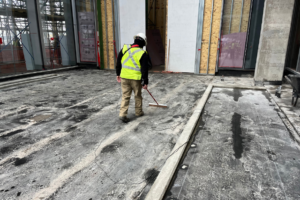
A thorough forensic investigation typically includes a detailed visual inspection of the affected area and surrounding building envelope components, a review of project documents including shop drawings, submittals, and specifications, and a careful look at manufacturer installation requirements for the products involved.
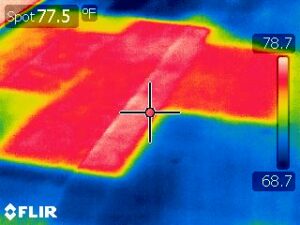
In many cases, field testing is also part of the process. That can mean electronic leak detection (ELD) to identify breaches in a waterproofing membrane, ASTM E1105 negative pressure testing on windows, AAMA 502.1 nozzle testing on storefront systems, or infrared thermal surveys to detect trapped moisture. The testing we choose depends on what the building tells us.
The written report ties it all together: what was found, what the standard of care required, how the installation fell short, and what the causal connection is between the defect and the claimed damage. That report becomes the roadmap for depositions, settlement negotiations, or trial.
The Wave of Cases Still Coming
Construction defect water intrusion litigation is not slowing down. The COVID-19 pandemic created conditions that produced a wave of defective buildings. Material shortages forced substitutions that changed dew points and accelerated system failures. Labor shortages meant less experienced workers with less supervision. Start-and-stop delays left materials exposed to weather longer than they were designed to handle, and different crews started versus finished the same systems.
Defects built into structures from 2020 through 2023 are just now showing up as visible damage. The cases are coming. Having an expert witness who understands the full chain from specification to installation — and who has the field experience to hold up under cross-examination — is not a luxury in construction defect water intrusion litigation. It is the foundation of a well-prepared case.
If you have a case involving water intrusion and want a no-charge review of the facts, contact Jeff Martin at (864) 965-8668 or [email protected].