Waterproofing leak detection finds breaches in a membrane before pavers, soil, or a green roof cover it up. Once that overburden is in place, a single leak can cost a fortune to locate and repair. Testing first is the cheapest insurance a project can buy.
Waterproofing leak detection is a simple idea with huge stakes. It means testing a waterproofing membrane for holes and breaches before anything is built on top of it. Skip that step, and a small defect you could have fixed in an afternoon can turn into a six-figure repair years later.
We have spent decades on rooftops and plaza decks. The most expensive leaks we see are almost never on an open roof. They are the ones hiding under tons of pavers, soil, and plants.
What Is Waterproofing Leak Detection?
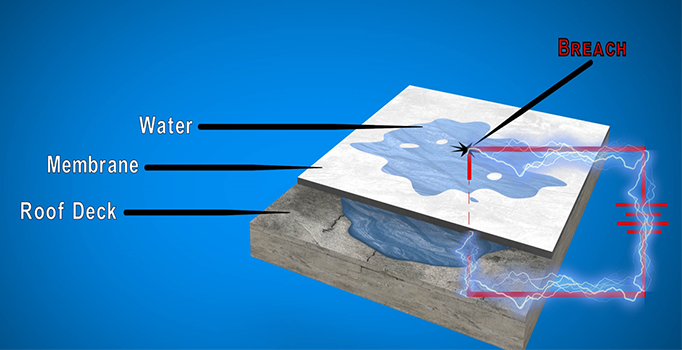
Waterproofing leak detection is a test that locates breaches in a membrane. The most common method is Electronic Leak Detection (ELD). An electrical charge is applied across the membrane. A technician then scans the surface with a probe or a broom-style tool. Because the membrane is an insulator, current only flows where there is a breach. The tool finds that breach, even when it is far too small to see.
ELD works because of one rule. The substrate below the membrane has to be conductive so the electrical circuit can be completed. The method is described in ASTM D7877, the standard guide for electronic methods of detecting leaks in waterproof membranes. You can read the ASTM D7877 scope here.
If you want the full breakdown of how the scan itself works, we cover it in our post on electronic leak detection testing. This article is about something different. It is about timing.
Why Waterproofing Leak Detection Has to Happen Before the Overburden
Overburden is everything that goes on top of the membrane. On a plaza deck or terrace, that can mean insulation, a root barrier, pavers, growing media, and live plants. It adds up fast, and it is heavy.
Once the overburden is in place, the membrane disappears from view. A leak underneath does not announce itself at the breach. Water travels. It moves sideways under the membrane and shows up at a low point, often far from the actual hole.
So now you have two problems instead of one. You have a leak, and you have no idea where it starts. Finding it means pulling up overburden across a wide area, not a tidy little patch.
What It Costs to Tear Out Overburden
We worked on a major high-rise project in Charlotte with a huge amount of terrace area. Every terrace was a waterproofing system buried under insulation, a root barrier, and overburden. Some sections were paved. Others were green roofs full of growing media and plants.
Picture finding one breach under all of that, years after the building opened. The labor just to remove the overburden and reach the membrane is enormous. Then you still have to find the breach, fix it, and put everything back.
The math is not close. Testing a clean membrane takes a crew a day or two before anything is covered. Tearing out a buried terrace to chase a mystery leak can run into hundreds of thousands of dollars. That is why we test once the trades and equipment are off the deck and the team is ready to install overburden. We confirm the membrane is sound, make any repairs, and then the crew proceeds with confidence.
The Cost Is Not the Only Risk
Money is the obvious problem. It is not the only one.
When water gets into a roof or deck assembly, the insulation loses R-value, so the system stops performing the way it was designed to. Water also does damage you cannot see right away. It rots framing, corrodes fasteners, and feeds microbial growth inside the assembly and the interior. On an occupied building, that can mean vacating floors while crews tear out and rebuild.
There is one more trap. A small leak can run for years before anyone notices. By the time a stain appears on a ceiling, the damage behind the wall is often far worse than the breach that caused it. A little water and a lot of time is a bad combination in any building.
When Should Waterproofing Leak Detection Happen?
The right window is narrow but clear. Test after all other trades and their equipment are off the deck, and before any overburden goes on. That is the one moment the membrane is both finished and still fully exposed.
Many specifications already require this test. If your project spec calls for membrane testing, it is a contractual obligation, not a nice-to-have. Even when a spec is silent, the cost comparison makes the decision for you. Leak surveys also apply well beyond terraces. They work on roofs, plaza decks, pools, and water features, anywhere a membrane will be covered or holds water.
The Fortress Perspective
Here is why this matters, coming from us. We did not learn waterproofing from a textbook. We installed these systems with our own hands before we became consultants. We know exactly where breaches happen. They cluster at transitions, at penetrations, and anywhere another trade dragged a cart or set a ladder.
That field background changes how we test. We are not just running a tool across a surface. We are inspecting what you are expecting, looking hardest at the spots that fail first, because we have had to repair those failures ourselves.
Test Before You Cover
Planning a project with terraces, plaza decks, or a green roof? The time to test is before the overburden goes on, not after the first leak appears. Request a free consultation, and we will walk you through the right testing approach for your building.
Inspecting What You’re Expecting.
Related Articles
- Electronic Leak Detection Testing: What ELD Finds That Visual Inspections Miss
- Construction Defect Water Intrusion: Why It Drives 70% of Construction Lawsuits
Frequently Asked Questions
What is overburden in waterproofing?
Overburden is any material installed on top of a waterproofing membrane. On terraces and plaza decks, it usually includes insulation, a root barrier, pavers or topping slabs, growing media, and plants. It protects the membrane, but it also hides it.
Is waterproofing leak detection required by code or specification?
It depends on the project. Many commercial specifications require membrane testing before overburden is installed, especially on plaza decks and green roofs. When the spec calls for it, the test is contractually required. When it does not, owners often add it because the cost of a buried leak is so high.
Can you test a membrane after the overburden is installed?
Some methods can be used on covered membranes, but they are slower, less precise, and far more expensive. The point of leak detection is to catch defects while the membrane is still exposed and easy to repair. Waiting until after the overburden is on defeats most of the value.
How long does waterproofing leak detection take?
For a typical deck or roof section, a survey takes one to two days once the surface is clear and ready. That is a small window compared to the weeks of demolition and rebuilding, a missed leak can require later.