Buildings constructed between 2020 and 2023 are starting to show serious defects from COVID-era material substitutions, labor shortages, and rushed schedules. Water intrusion is the primary failure mode — and according to AIA data, it already drives more than 70% of construction litigation. A significant wave of construction defect cases is coming. Attorneys who are prepared now will be well-positioned when it hits.
Water doesn’t wait. That’s one of the first things Jeff Martin will tell you after more than 37 years in the commercial roofing and building envelope industry. And right now, water is working its way through thousands of buildings constructed during one of the most chaotic periods in modern construction history.
The question isn’t whether construction defect cases are coming. They’re already here. The question is how prepared you are to handle them.
The Perfect Storm Nobody Could Have Predicted
The COVID-19 pandemic hit the construction industry like nothing before it. But unlike many sectors that simply shut down, construction kept moving — just under extraordinarily difficult conditions.
Three forces collided simultaneously: a global pandemic, supply chain failures that made specified materials impossible to get, and a labor shortage that was already severe before 2020 and became critical almost overnight. Any one of these alone would have been a significant industry disruption. Together, they created what Jeff Martin and Mark Stewart of Fortress Building Envelope Consulting call a “perfect storm” — one whose full consequences are only now beginning to surface in the buildings themselves.
According to the National Association of Home Builders, the construction industry faces a shortage of more than 400,000 workers. That gap doesn’t disappear when a building gets finished. It shows up later, in the walls and on the roofs, when the water finally finds a way in.
Five Reasons Construction Defect Cases Are About to Multiply
1. Material Substitutions That Changed the Physics of Buildings
When specified materials weren’t available, project teams had to make fast decisions. Some substitutions were benign. Others fundamentally changed how a building performs.
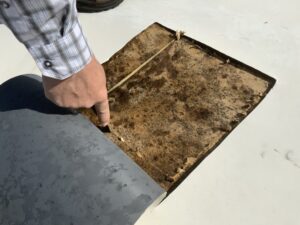
Here is a real scenario Fortress BEC has investigated: During the pandemic, a wood-structure apartment building couldn’t get the above-deck roof insulation specified in the drawings. The designer moved batt insulation beneath the deck instead. That single decision shifted the dew point inside the assembly. Moisture began condensing on the underside of the roof membrane. The result was destroyed framing, microbial growth on upper floors, a complete vacating of the top floor, and a full tear-off back to the deck with structural reinforcement required.
Nobody cut corners with bad intentions. They simply substituted a material without fully understanding the thermal consequences. These cases are not rare — they are everywhere, waiting to be discovered.
The key questions for any litigation involving COVID-era substitutions: Was the substitution approved by the architect of record? Did the substituted material perform the same function? Were the subcontractors trained to install it? Does it interface correctly with adjacent materials? In most cases, the answers reveal a chain of undocumented decisions that no one has yet been held accountable for.
2. Start-Stop Sequencing That Introduced Moisture Before Enclosure
Normal construction has a logical sequence. The building envelope goes up, the interior is protected, and finishes follow. COVID disrupted that sequence on thousands of projects.
Material delays forced crews to leave partially completed assemblies exposed. Roof membranes that should have been covered within days sat exposed for weeks. Daily tie-ins, the temporary seals that protect an incomplete roof from rain between work shifts, were installed and removed repeatedly, each time creating new opportunities for moisture entry. Moisture that entered the assembly during construction often didn’t make itself known until the building was occupied and the owner started finding stains, mold, or mysterious leaks that appeared only during certain weather conditions.
This is a litigation nightmare to untangle. Different crews started and finished work. Documentation is incomplete. The installer who made the critical error may be an undocumented worker who is no longer reachable. The forensic work of tracing the path of that original moisture intrusion is exactly what building envelope experts like Fortress BEC do every day.
3. Labor Shortages Meant Less Experienced Workers With Less Supervision
The older generation of skilled craftsmen in roofing and waterproofing is retiring. Their replacements, in many cases, have never been formally trained and learned their trade informally on the job — with limited supervision from foremen who were themselves stretched too thin across multiple projects.
One pattern Jeff and Mark see constantly: a general contractor subcontracts the roofing work to a roofing company that subcontracts the actual installation to another crew. By the time the work is done, the question “who actually installed this?” can take a deposition just to answer.
Manufacturers used to be selective about which contractors they approved for warranty work. The pressure of market demand has changed that. An approved applicator today may have far less experience than an approved applicator a decade ago. When their installation fails, and an owner files a warranty claim, the warranty may not cover what the owner thinks it covers, and an attorney with a construction defect case is needed.
4. The 2-to-7-Year Lag Before Defects Show Up
Building envelope failures are rarely immediate. A punctured roof membrane, a missed step flashing detail, a waterproofing membrane that wasn’t tested before overburden was installed — these defects can quietly allow water to migrate through a structure for years before the damage becomes visible or undeniable.
Construction defect cases arising from 2020-2023 construction are just now entering their window of discovery. The buildings are aging. They’ve gone through multiple seasons of thermal cycling, UV exposure, freeze-thaw cycles, and rain events. The defects are emerging.
Law firms that handle construction litigation should expect a sustained increase in cases over the next three to five years from this cohort of projects alone.
5. The Immigration Enforcement Complication
This one doesn’t get discussed enough in legal circles, but Jeff and Mark raise it regularly in their presentations to bar associations: a significant portion of the construction workforce during the pandemic years was undocumented or semi-documented immigrant labor. Immigration enforcement trends have made locating and deposing these witnesses increasingly difficult, if not impossible.
When a waterproofing failure traces back to an installation crew that no longer exists as an entity, the forensic investigation of the physical evidence becomes even more critical. The building itself has to tell the story.
What This Means for Your Practice
The construction defect case you take today probably involves a building where multiple failure mechanisms are layered on top of each other. A material substitution that changed the dew point. A crew that didn’t read the manufacturer’s installation instructions. Moisture was trapped in the assembly during construction, which went undocumented. An owner who assumed their roof warranty would cover the damage found out it doesn’t.
Untangling these cases requires an expert witness who understands not just building science theory but the reality of how construction actually happens — the shortcuts, the miscommunications, the pressure to keep schedules moving regardless of conditions.
Jeff Martin has been in commercial roofing since 1987. Mark Stewart has been in it since 1990. They both came from the contracting side before becoming forensic consultants. When an opposing expert gives testimony that doesn’t match how construction actually works in the field, they can identify it immediately — because they lived it.
The Bottom Line for Construction Litigation Attorneys
Construction defect cases are a growth area in litigation, and the COVID era has loaded the pipeline. Water intrusion is the dominant failure mode, responsible for more than 70% of all construction lawsuits according to AIA data, and the conditions of 2020 to 2023 created more opportunities for water intrusion than any period in recent memory.
The attorneys who are building relationships with credible, field-experienced building envelope experts now will be better equipped when cases come through the door. The initial consultation with Fortress BEC is free. If they can help you, they’ll tell you how. If they can’t, they’ll tell you that too, and point you toward someone who can.
How long do construction defect cases involving water intrusion typically take to surface?
Building envelope defects often take two to seven years to become visibly apparent, depending on the type of failure, building use, and local climate conditions. Defects from COVID-era construction (2020-2023) are just entering the discovery window, which is why construction litigation attorneys should expect significant case volume over the next several years.
What is the most common cause of construction defect litigation?
According to data tracked by the American Institute of Architects, water intrusion has been responsible for more than 70% of all construction lawsuits for more than a decade. Building envelope failures — in roofing, waterproofing, walls, and fenestration — are the primary source.
What should I look for in a building envelope expert witness?
Look for someone who came from the contracting side of the industry before becoming a consultant. Field experience matters because it allows the expert to evaluate whether a contractor’s testimony reflects how construction actually works. Certifications like RRC (Registered Roof Consultant) and RRO from IIBEC, along with forensic investigation experience across both plaintiff and defense cases, are strong indicators of credibility.