Clips are what hold a standing seam metal roof down, and their spacing is set by code based on where the building sits. Installing them correctly takes a chalk line and no special skill, which is exactly why crews cut corners. Close to 20 percent of the roofs Fortress inspected for manufacturers last year had to be rejected and torn off. A roof can look perfect from the ground and still come off in a wind event, and a standing seam metal roof inspection is how you find out before the wind does.
A Perfect Looking Roof Can Still Blow Off
Mark Stewart got called to a job outside Hillsborough, North Carolina. The metal roof was reported at 100 percent complete, and the contractor wanted it signed off.
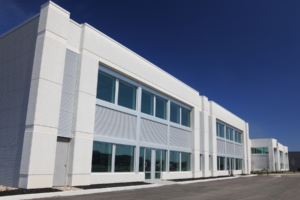
From the ground it looked like good work: straight panels, clean seams, tight trim. Most people would have signed it.
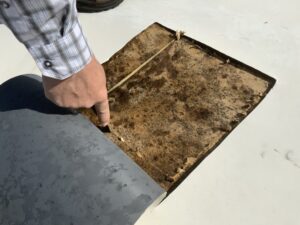
The ceiling had not gone in on the back half of the building yet. So Mark put a ladder up, got into the ceiling space, and read the clip spacing off the screw tips poking through the underside of the deck.
Nothing was closer than 4 feet. In places it ran 5 feet and even 6 feet. The specification called for 2 feet on center, everywhere.
Nobody standing on top of that roof could have known. That is what a standing seam metal roof inspection is for.
What Clips Actually Do
A standing seam roof has no exposed fasteners on the panel face. That is one of the reasons owners like it. The panels are held to the deck or the purlins by concealed clips, which also let the metal expand and contract as it heats and cools.
Those clips are the entire wind resistance of the roof. Spacing is not a preference. It is driven by wind zone and geography, and it is written into the drawings for that specific building:
- Tight in high wind mountain areas
- Around 2 feet on center through much of the Piedmont
- Tighter at the coast, often 12 inches on center for the first 6 to 8 feet of the perimeter and corners before spreading out
That is why the answer Jeff Martin hears most often on job sites is such a red flag. He asks a foreman why the clips are running wide and gets, “Señor, this is the way we did it on the last job.”
Maybe the last job was inland, and nothing happened. Move that same crew to a hurricane zone and the roof is a liability. The code is not asking for opinions.
The Easiest Step on the Roof Is the One That Gets Skipped
Setting clips correctly requires no real skill. You measure and mark the first panel, pull a chalk line across the roof, and drop every clip on the line.
It is not hard. It is tedious. Tedious plus hidden is where corners get cut, and clips are the most hidden component on the assembly once panels go on.
The numbers are not small. In the manufacturer inspections Fortress performed last year, close to 20 percent of jobs had to be rejected and torn off. Seven or eight were condemned outright.
None of those crews were trying to destroy a building. They were moving fast on a schedule nobody was checking.
Once the Roof Is Covered, Nobody Can Verify Clips
Here is the part that costs owners money years later.
When a roof is finished, and the ceiling is closed, the clips cannot be seen. If a wind event peels panels off and the spacing turns out to be wrong, the manufacturer warranty is still in force, but it will not cover a wind failure tied to spacing. The contractor is asked to produce in-progress photos proving the clips were set correctly. If those photos do not exist, the owner is holding a warranty that does not answer the one question that matters.
Wind uplift capacity is tested and published for these assemblies under standards like ASTM E1592, and the tested numbers assume the roof was built the way it was designed. Change the spacing in the field and the tested value no longer applies to your building.
Photos Are the Tell
Good contractors already take progress photos, and they hand them over without hesitating. They have nothing to hide and a reputation to protect.
Lower-tier subs either do not have photos or will not release them. And be careful with the ones you do get. A required photo can be staged from the one area that was done right and tell you nothing about the other 40,000 square feet.
Manufacturers also sit in an awkward spot here. Rejecting a large customer’s work risks losing that customer’s business to a competitor. That is precisely why an independent third-party inspection matters. We have no relationship to protect except with the owner.
Where a Third Set of Eyes Pays for Itself
We were at a brand new school in the Carolinas for a manufacturer warranty inspection. We were not the project consultant, and the job already had its own roof consultant.
The roofer had subbed out the metal work; the sub was making a mess, and between 60 percent and 70 percent of the standing seam roof was already installed out of spec. The consultant on the job had not flagged it.
Jeff called the contractor on the clip spacing. The contractor swore he was lying. They pulled panels. Jeff was right, and the whole wing had to come off and be redone.
That was expensive. It was still far cheaper than the alternative, which is finding out after the building is occupied, the ceilings are in, and a storm has already come through.
When to Schedule a Standing Seam Metal Roof Inspection
Final only inspection is close to useless on a metal roof, because the thing most likely to fail is the thing you can no longer see. A standing seam metal roof inspection should be planned as a series of interim visits:
- At kickoff. Review the drawings and specifications, then sit down with the general contractor, the roofer, and the sub who will actually install it.
- At the first panels. Verify the layout, the chalk lines, and the first run of clips. Catching it here costs almost nothing.
- At intervals during installation. Enough visits that no more than a small area can go wrong before somebody sees it.
- Before ceilings close. The last chance to read spacing from below without destroying anything.
- At completion. Seams, trim, terminations, flashings, and penetrations.
Being on the job early does something else too. In Jeff’s words, it puts the fear of God in the crew, and the contractor tends to put his better people on a job he knows is being watched.
Get Eyes on It Before the Panels Go Down
If you are an owner, a general contractor, or an architect with a standing seam roof going on this year, the cheapest day to catch a problem is the first day of installation. Call Mark Stewart at (919) 730-1785 or email [email protected].
Inspecting what you’re expecting.
Frequently Asked Questions
What is clip spacing, and who decides it?
Clip spacing is the distance between the concealed clips that fasten standing seam panels to the structure. It is set by the design based on the code, the wind speed for that location, and the roof zone, with tighter spacing at perimeters and corners. It is on the drawings.
Can clip spacing be checked after the roof is finished?
Sometimes. If the underside of the deck is still accessible, spacing can be read off the fasteners from below, which is exactly how we caught the Hillsborough roof. If the building is closed up, the options narrow to in-progress photos, installer records, or selective removal of panels.
Will a manufacturer warranty cover a wind failure caused by wrong clip spacing?
Generally no. The warranty stays in place, but a wind failure traced to improper attachment is not the manufacturer’s defect. That is why documentation during installation matters as much as the warranty document itself.
How long does an inspection take?
It depends on the size of the roof and how ready the site is. We work on a daily rate, so a roof that is clean and accessible when we arrive costs less to inspect than one that is not.