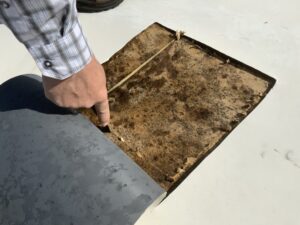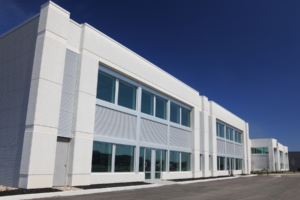
In most water intrusion cases, the window unit is not the defect. The failure is in the flashing and the wall around it. Four common causes point at four different defendants: the general contractor who controlled sequencing, the sub or supplier who put the wrong material in the opening, the trade that damaged good work after it was done, and the designer who never detailed the transition. Figuring out which one applies is the work a water intrusion expert witness does before anyone sits for a deposition.
A client calls with stained drywall under a row of windows. The natural assumption is that the windows are bad. Sue the window company.
That theory usually falls apart.
Windows arrive already tested. The manufacturer rated the unit in a lab before it shipped, and there is a paper trail proving it. What nobody tested, and nobody watched, is the opening it went into.
Jeff Martin has been on job sites since 1987. Mark Stewart came up through the contracting side before he became a consultant. They see the same thing over and over. The glass is fine. The frame is fine. The water came in around it.
Why Does the Window Get Blamed When the Flashing Failed?
The window is the only part anyone can see.
Everything that actually keeps water out is buried. The sill pan flashing. The head flashing. The air and water barrier where it wraps into the rough opening. The perimeter sealant. The interior seal at the trim.
Every one of those pieces gets installed by a different crew, on a different day, sometimes weeks apart. Once the cladding goes on, none of it can be seen again.
So the leak shows up at the window because that is the low point. It did not start there.
That distinction matters in your case. It changes who you name, what you ask for in discovery, and what your expert has to prove.
Cause One: Did Sequencing and Piecemeal Release Break the Assembly?
The window opening is a layered assembly. Each layer has to lap over the one below it, in order, so water runs out instead of in.
When work gets released in pieces, that order breaks. One crew sets the units. The flashing crew comes back later. Sealant goes on after the cladding is up. Nobody is looking at the assembly as one system.
This one points at the general contractor. The GC controls the schedule. The GC decides when a trade comes back, when a scope gets released, and whether anyone inspected the opening before the next layer covered it.
Ask for the schedule. Ask for the daily reports. Ask when each portion of the fenestration scope was released and who signed off before it was covered.
Cause Two: Were the Wrong Materials Used at the Opening?
Sealants, tapes, and flashing membranes are not interchangeable.
Some sealants will not stick to some substrates. Some tapes are not compatible with the coating on the window frame. Put the wrong two products together, and the bond fails in a couple of years, even though the installation looked perfect on day one. The Fenestration and Glazing Industry Alliance publishes compatibility guidance many manufacturers reference for exactly this reason.
Then there is the leftover problem. A crew runs short, so they finish the run with whatever is on the truck from the last job. It looks the same. It is not the same.
This one points at the subcontractor or the supplier. The proof is in the submittals, the material certifications, and what the manufacturer’s published compatibility chart actually says.
Compare the approved submittal to what came out of the wall. When those two do not match, you have a defendant.
Cause Three: Did Another Trade Damage Work That Was Already Correct?
This is the one attorneys underestimate.
Ask Jeff about job site culture, and it comes up fast. The roofer and the waterproofer are the least respected trades on the job. Other crews treat finished work as a work surface.
The same thing happens at window openings. Flashing gets installed correctly. Then the cladding crew fastens through it. The framer cuts a notch. Somebody sets a ladder against a sill pan and creases it.
None of it is malicious. Most of the time the person who did it never knew.
This one points at whichever trade came next. That means the sequence of who was on that elevation, and when, is evidence. Progress photos, delivery tickets, and sign-in logs put people in front of that opening on a specific date.
Cause Four: Was the Detail Ever Drawn?
Sometimes the crew followed the drawing exactly, and the drawing was wrong or missing.
Building envelope transitions are the hardest part of a set of documents to get right. Architects know a great deal about a great many things. Envelope detailing is often not the strongest part of that list, which is why design peer review exists in the first place.
When the drawing shows a window and shows a wall, but never shows how the water barrier ties into the pan, the crew improvises. Twelve crews improvise 12 different ways.
This one points at the designer of record.
The test is simple. Ask for the detail. If a defensible detail exists and the field did not follow it, the liability moves down the chain. If no detail exists, it stays up.
Why Does the Cost Jump After the Building Opens?
The math is what makes these cases worth what they are worth.
While the wall is open, a bad pan flashing is a few hundred dollars and an afternoon. Once the building is closed up and operating, the same defect can run roughly 10 times that, and often far more. You are now paying to remove cladding, replace saturated sheathing and framing, remediate microbial growth, redo interior finishes, and work around tenants.
Add the fact that the damage has been running quietly for two or three years before anyone saw a stain.
That gap between what prevention cost and what repair costs is where the damages number comes from.
What Should You Ask For in Discovery?
Five requests do most of the work in a window flashing case:
- The project schedule and any records showing when fenestration scopes were released
- Approved submittals and material certifications for every sealant, tape, and flashing membrane at the openings
- Progress photographs of the openings before cladding, by elevation and date
- The architectural details for the window head, jamb, and sill, including revisions
- Any water testing records, including whether ASTM E1105 testing was specified and whether it was performed or waived
That last one comes up constantly. When testing was in the specification and got waived for schedule, that decision has an author.
Talk It Through Before the Theory Is Locked In
Fortress BEC works water intrusion cases nationwide, on both sides of the docket. The first conversation is free. Send photos and documents, and Jeff will tell you what he sees and whether he can help. If he cannot, he will try to point you to someone who can.
Call Jeff Martin at (864) 965-8668 or email [email protected].
Inspecting what you’re expecting.
Frequently Asked Questions
Is the window manufacturer usually liable in a water intrusion case?
Rarely. Window units are tested and rated in a lab before they ship, and the paperwork proving it is easy to obtain. Most failures happen at the interface between the window and the wall, which is field work performed by other trades. A manufacturing defect is possible, but it should be ruled out rather than assumed.
How do you determine the cause after the wall is closed up?
Several ways, and usually more than one. Infrared surveys show where moisture is sitting. Window water leak testing under controlled pressure recreates the leak so the entry point can be seen. Targeted openings expose the actual condition of the flashing. Progress photos and submittals fill in what cannot be reached.
When should an attorney bring in a water intrusion expert witness?
Early, before the theory of the case is set. The four causes above lead to four different defendants, and naming the wrong one costs time you do not get back. An initial review of photos and documents is enough to tell you which direction the evidence points.