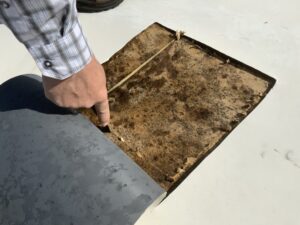
- Visible damage is almost never where the failure started.
- Water travels. The entry point and the symptom are often far apart.
- Early warning signs include staining, efflorescence, musty odors, cracked sealant, and moisture at transitions.
- Leaks that come back after repairs mean the real source was never found.
- Testing is the only reliable way to locate where water is actually getting in.
Water does not announce itself.
It moves quietly. It finds gaps in sealant. It travels along steel. It collects behind walls where no one looks. By the time a stain appears on a ceiling, water has usually been moving for a while.
That is the core problem with building envelope failure. What you see is rarely where the problem started.
What Is the Building Envelope?
The building envelope is everything that separates the inside of a building from the outside. Roofing. Exterior walls. Windows. Below-grade waterproofing. Doors and transitions between systems.
It is not one system. It is several systems working together. When one fails, water rarely stays put. It moves.
More than 70 percent of construction lawsuits involve water getting in where it should not. Most of those failures were visible before they became legal problems. Someone just did not know what they were looking at.
Early Warning Signs Worth Taking Seriously
Interior Staining and Discoloration
Water stains tell you water arrived. They do not tell you where it came from.
Water can enter at a roof penetration, travel along a beam, and show up on a wall two floors below. It can enter at a window head and appear at the sill.
Do not assume the source is directly above the stain. That assumption leads to the wrong repair. And the leak comes back.
Peeling or Bubbling Paint
Paint fails for many reasons. But peeling or bubbling near windows, doors, or exterior walls often means moisture is trapped inside the wall assembly.
This is common near transitions, the places where one system meets another. Window frames to wall cladding. Cladding to roofing. Roofing to mechanical penetrations. These handoff points are where many failures begin.
Musty Odors
A musty smell almost always means mold or mildew. Mold needs moisture, warmth, and something to grow on. Building materials supply the last two. If you have the odor, you have the moisture.
Musty odors are easy to dismiss. They get blamed on HVAC or a slow drain. But if the smell keeps coming back after cleaning, the moisture source has not been found.
Efflorescence on Masonry
Efflorescence is the white, chalky deposit you sometimes see on brick, block, or concrete. It forms when water moves through masonry, picks up dissolved salts, and leaves them on the surface as it dries.
It is evidence that water is moving through the wall. Over time, repeated wetting and drying breaks down masonry. Efflorescence often points to failed flashing, a saturated wall cavity, or sealant that is no longer doing its job.
Cracked or Failing Sealant
Sealant gets old. It shrinks and loses its grip. Cracked or missing sealant at joints, penetrations, or transitions is an open path for water.
Hairline cracks are hard to see from a distance. A joint that looks fine may have separated along one edge. Check sealant at window perimeters, parapet bases, mechanical and electrical penetrations, and anywhere two different materials or systems meet.
Moisture at Window and Door Transitions
Moisture at windows is a common complaint. But the source is rarely the window seal itself.
Water intrusion here often comes from the flashing behind the window, not the window. Or it comes from above, where water is not being directed away from the opening properly.
If moisture keeps coming back after a window has been resealed, the seal was not the problem.
Recurring Leaks After Repairs
This is the clearest sign of all.
A repair that does not hold means the repair addressed the symptom, not the source. The water has another path in. Or the actual entry point was never found.
Recurring leaks mean the building needs a real investigation, not another patch.
Why the Visible Damage Is Not the Starting Point
Water moves along the path of least resistance. It follows structure, slopes, and gravity. It can travel a long way before showing up as visible damage.
This is why field investigation matters. You have to find where water got in, how it traveled, and why the system let it through.
Professional building envelope testing can locate actual entry points. Electronic leak detection finds breaches in roofing and waterproofing membranes. Water testing to ASTM E1105 or AAMA 502.1 standards applies controlled water to wall and window systems to see where it enters. Infrared thermal surveys reveal moisture trapped inside assemblies that looks fine from the surface.
These methods find problems that a visual inspection will not catch.
That distinction matters most when findings go into a report. A forensic building envelope consultant is not just looking for damage. They are documenting where the system failed, why it failed, and what that means going forward.
What Happens When These Signs Are Ignored
Small sealant failures grow into large water intrusion events. Surface moisture becomes deep structural saturation. A ceiling stain turns into a mold remediation project. A building that needed targeted testing now needs a full forensic investigation.
Catching problems early costs a fraction of what addressing them later requires. A consultant reviewing a roof and wall assembly before damage compounds is a very different engagement than a forensic investigation after water has been moving through a structure for two years.
Not sure where your building envelope stands? Contact Fortress BEC for a free case review and find out what others may have missed.
Related Articles
- Why Construction Defect Cases Are About to Surge And What Attorneys Need to Know Now
- Building Envelope Expert Witness: 5 Things Good Attorneys Look For
- Construction Defect Water Intrusion: Why It Drives 70% of Construction Lawsuits
Frequently Asked Questions
How do I know if I have a building envelope problem or just a maintenance issue?
If a repair did not hold, or if a symptom keeps coming back, you likely have a building envelope issue. Persistent moisture, recurring stains, and odors that do not resolve are signs the underlying cause has not been found.
Can I find the water entry point myself?
Visual inspection can find symptoms but rarely pinpoints the source well enough to guide a reliable repair. Water travels. The entry point is often far from where the damage shows up. Professional testing traces water back to where it actually got in.
What does building envelope failure analysis involve?
It usually includes a site visit, document review, and field testing. The methods depend on the systems involved. They may include electronic leak detection, water testing to ASTM or AAMA standards, and infrared thermal imaging. The goal is to document where and how the system failed, not just where the damage is.
Is efflorescence a serious problem?
It depends on how much there is and how long it has been there. Efflorescence is a symptom, not a structural failure by itself. But the water movement causing it can damage masonry and surrounding assemblies over time. It is worth investigating rather than cleaning and ignoring.
When should I bring in a building envelope consultant?
Early is always better than late. If you are seeing more than one of the signs in this post, if repairs are not holding, or if you are planning a capital project and want to know the true condition of your envelope systems, a consultant gives you accurate information before decisions are made.